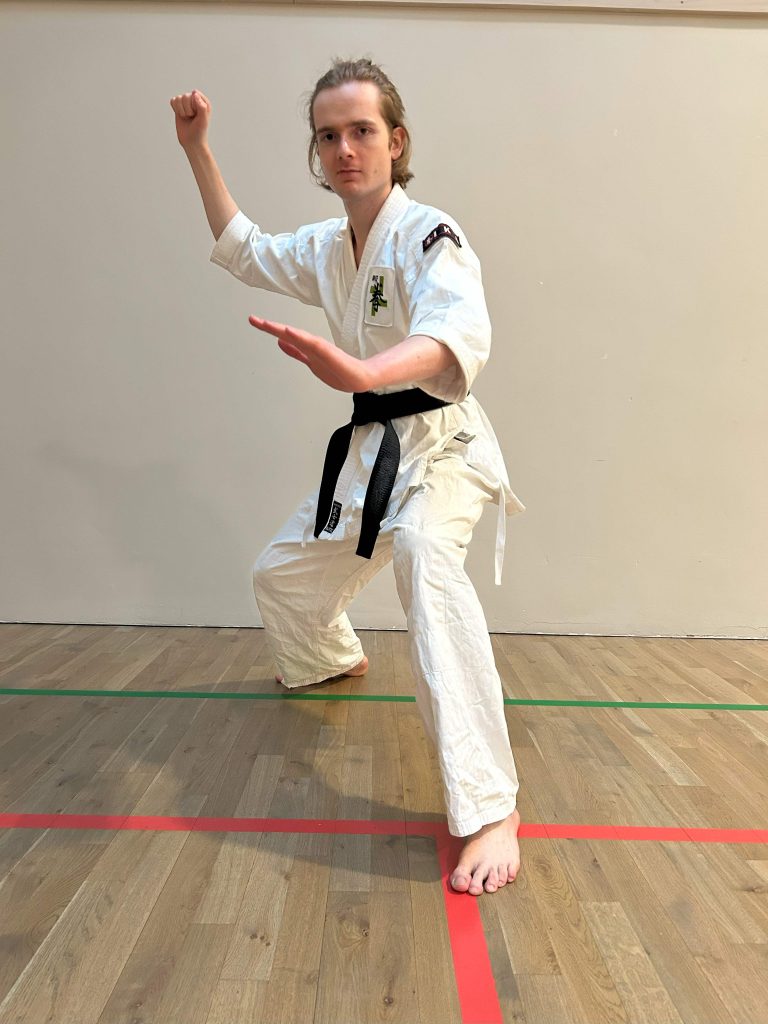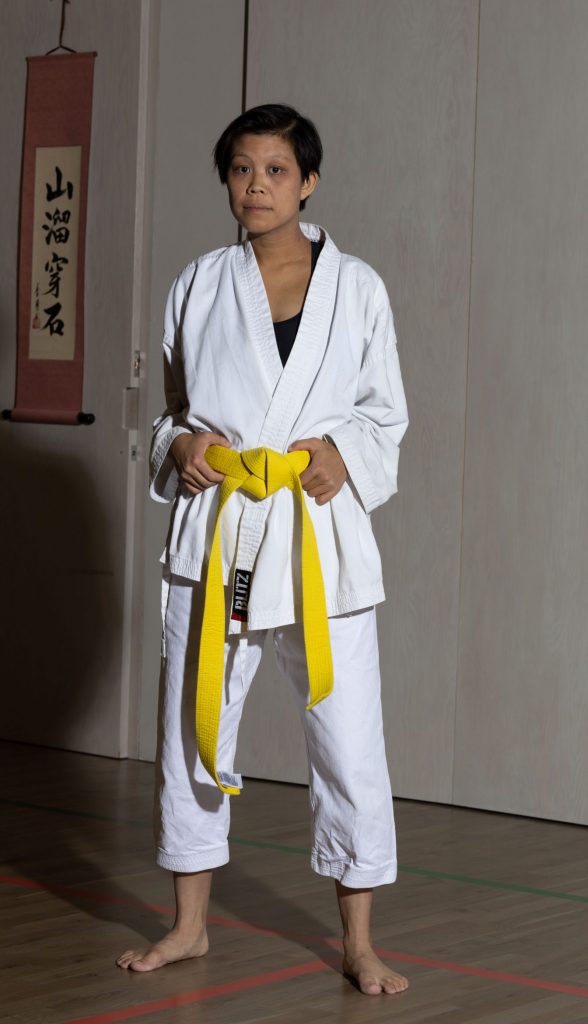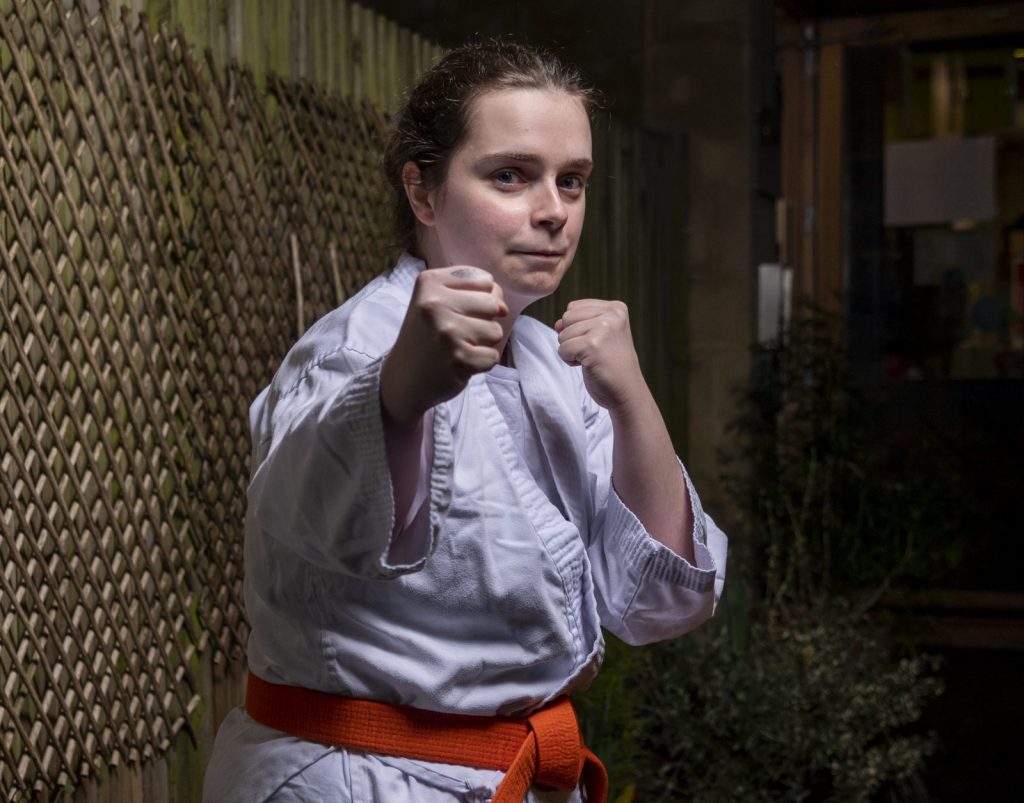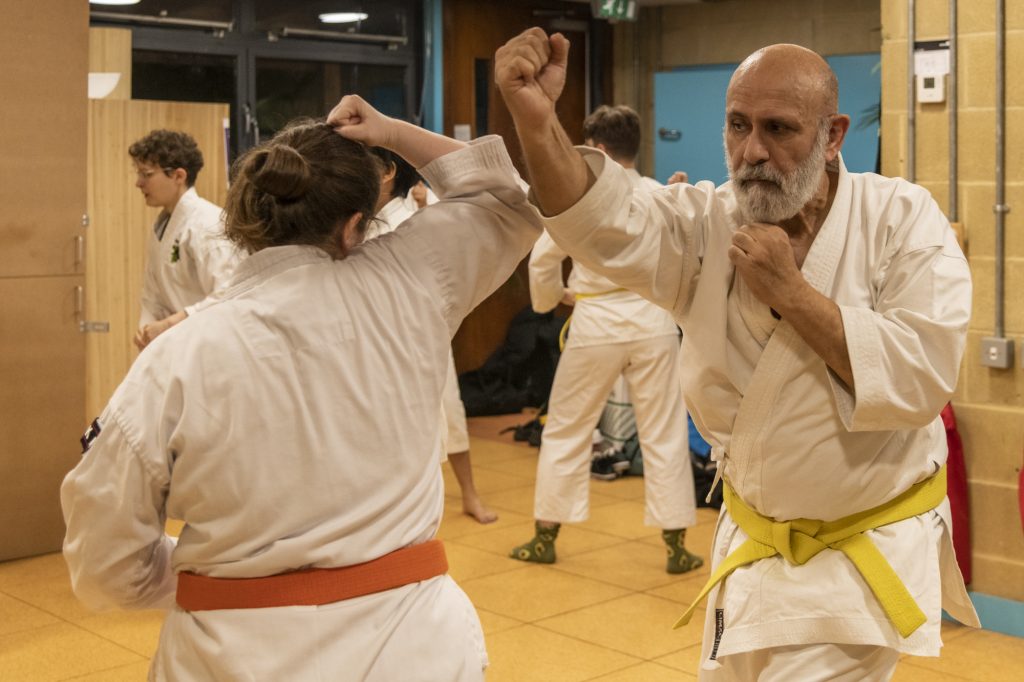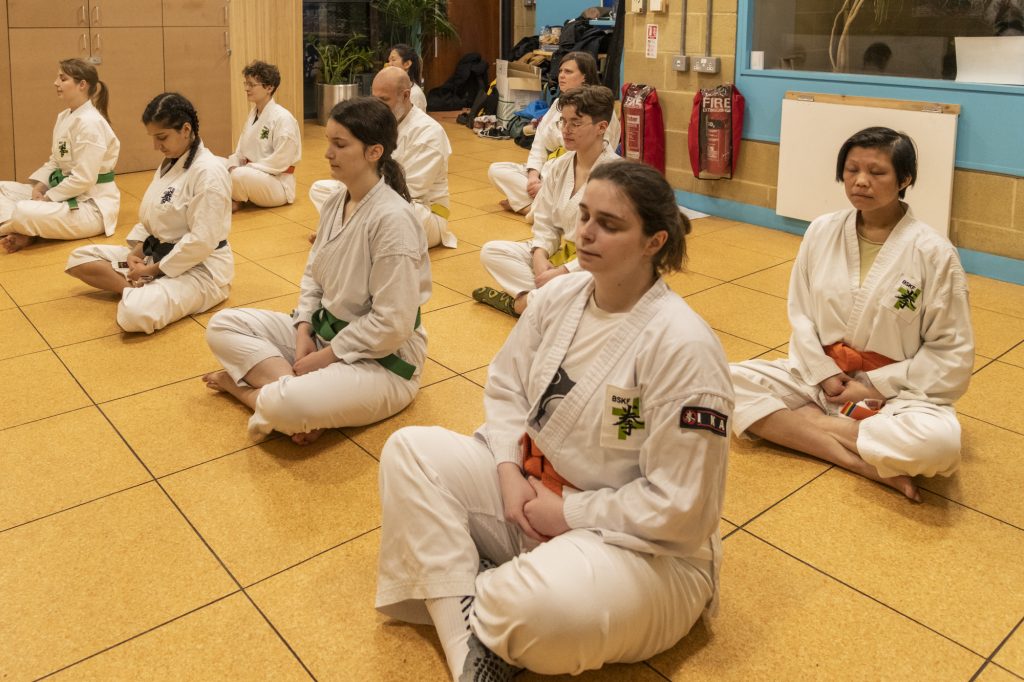
Shorinji Kempo teaches practical self-defence, fitness training and meditation practices.
Here in Camden, we practice a modern Japanese martial art called Shorinji Kempo. Our martial art uses both ‘hard’ strikes (punches or kicks) and ‘soft’ grappling techniques. It is a combination of Muay Thai, Karate, Jujitsu, Aikido all wrapped up in Buddhist philosophy. Sounds unique? That is because it is and it is worth giving it a go.
Everyone arrives for a different reason. Some want to learn self-defence. Some are looking for fitness. Others want more confidence, a new challenge or simply a welcoming community. Whatever brings you through the door, you don’t need any previous experience. You don’t need to be fit, flexible or particularly fearless. That’s what training is for.
First Few Classes: Finding Your Voice – Kiai
Your first few classes are all about discovering what you’re capable of. You’ll learn how to use a strong kiai (shout), practise simple releases from grabs and explore fundamental striking techniques. Most importantly, you’ll start finding your voice. Many people arrive convinced they’re not confident enough, coordinated enough or sporty enough. During your first month which you can experience for free we can teach you to find your voice when you freeze.
White Belt: Getting Started
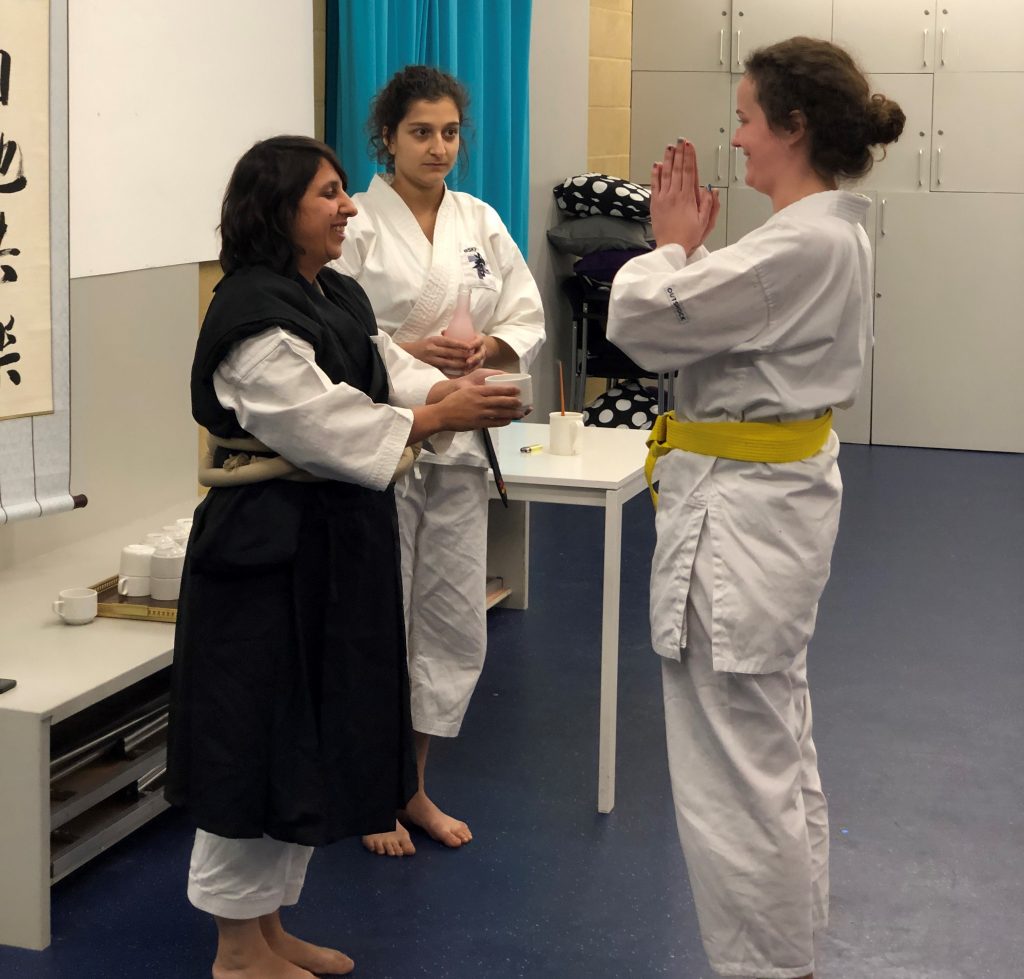
Your journey of learning releases from grabs and fundamental striking with fists, elbows and kicks continues when you decide to get into a white uniform. Training with everyone in the club you will learn the fundamentals of keeping yourself safe in scary locations, standing up for yourself when you are under threat and calming yourself when you feel overwhelmed.
Blue Belt: Growing Confidence
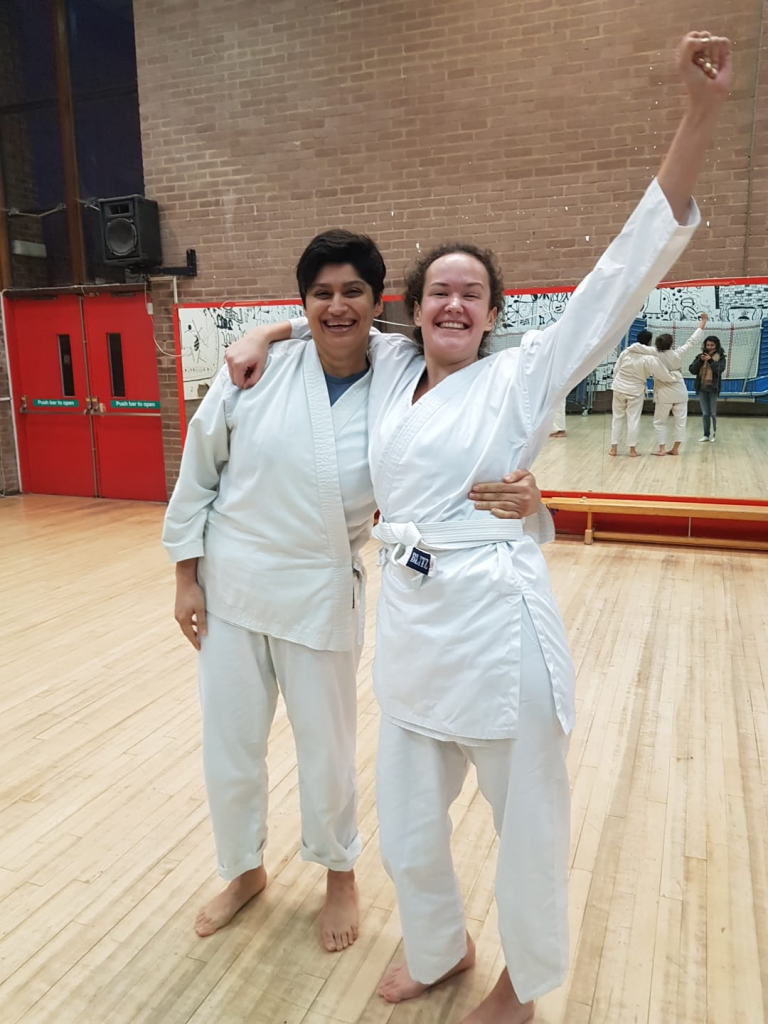
Blue Belt is often where things start to click. Techniques feel less awkward, movements become more natural and you begin to trust yourself. The confidence you develop in training has a habit of appearing elsewhere too, whether that’s at work, university or in everyday life. You stand a little taller. You worry a little less about your safety.
Brown Belt: Learning Resilience
By Brown Belt, training becomes about more than learning techniques that adapt to different assailants. You develop resilience, consistency and a deeper understanding of self defence. There will be challenges, frustrations and plenty of moments when things don’t go to plan. That’s normal. Progress isn’t about being perfect. It’s about continuing when things are difficult.
Black Belt: A Significant Milestone
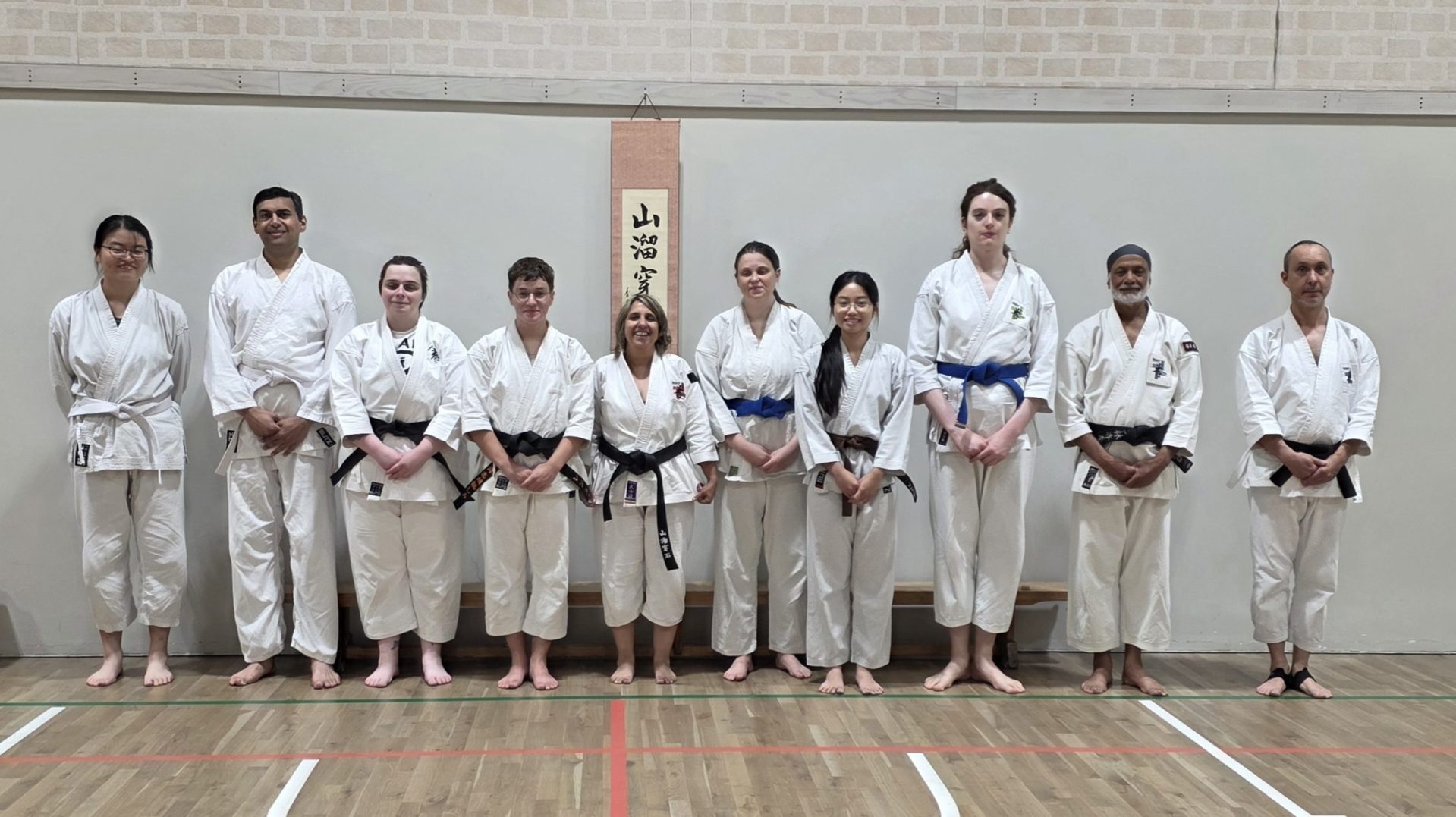
Black Belt is a proud achievement and recognition of a few years of hard work, perseverance and growth. Despite what films might suggest, it isn’t the end of the journey. It’s the point where deeper learning begins. The belt changes colour. You don’t suddenly become a martial arts superhero. You simply become a more experienced version of yourself.
Third Dan and Beyond: Leadership and Purpose
At the senior levels, the emphasis gradually shifts from your own development to helping others with theirs. Teaching, mentoring and leadership become increasingly important alongside the philosophy of Shorinji Kempo, including mindfulness, compassion and personal responsibility. The highest ranks aren’t defined by being the toughest person in the room. They’re defined by how many people you’ve helped along the way.
More Than Punching and Kicking
Yes, you’ll learn practical self-defence. Yes, you’ll improve your fitness. And yes, you’ll probably discover muscles you didn’t know existed.
But what keeps many people training for years is something bigger than that: confidence, friendship, belonging and a sense of purpose. It is our community!
How to Punch or Kick -The Five Elements of Atemi
In Shorinni Kempo we teach the five key aspects of effectively landing your punch or kick regardless of body type. These are broken down as: Aim, Distance, Angle, Speed and Tactics. We don’t hide things here but when we train, we want to ensure that all five are present in your fighting style. If any one element is missing, then Shorinji Kempo would consider it a weak attack.
To understand how to aim, you have to both know – and then successfully hit – specific weak points (kyushu). We attack these sensitive points in order to stop an attacker, but not permanently damage them. The weak points are listed in the BSKF syllabus. What isn’t documented is the angle, which varies from pressure point to pressure point.
What distance you adopt depends very much on your own body type. If you are diminutive (like Sensei Kavita) you will need to attack and defend from a different distance than a taller person. In most cases, your opponent is unlikely to match your body type, so you need to adapt to them too. Distance is a whole subject in its own right (under a heading called ‘Ma-ai‘ which will always sound like regional cocktail to Kavita).
Another topic for later is kyojitsu – it just wouldn’t be fun if we told you all the tactics without coming to class …
When it comes to speed, the faster you can attack while maintaining accuracy, the better your strike will be.
The Three Elements of Ken (Putting your skills together)
In all walks of life, to effectively progress you need goals, resources and the ability to execute your aims. This is also the case for practicing self-defence; you need a strategy and techniques which are built on foundational skills. In Shorinji Kempo and other Japanese martial arts they are referred to as;
Gi (skill) – The foundational skills that allow you to land your punch or kick.
Jutsu (application) – grouping together the skills to make up a technique.
Ryaku (strategy) – knowing when to apply a particular technique in your situation.
It is often the fusing of these three things that make you gasp when you watch a great fight scene in a film.
Go Ju Ittai
All our best techniques combine hard aspects (a punch or kick) with softer techniques such as throws that use the attacker’s weight against them.
Kumite Shutai
An important part of our training is the community that we create together. Part of making that happen is through training in pairs. Your grading partner, embu partner or that random training partner who shows up just once, can all provide insights to improve your techniques. Shorinji Kempo is designed in such a way that you will learn it best when
training with others.
Heijo shin (Calm Mind)
Having a calm mind in a stressful situation allows you to react. You don’t want to freeze. “Those who can maintain a composed state of mind, no matter what shocks or changes they meet, have a great advantage” so it is said in the fabled Shorinji Kempo pink book.
At Camden Kempo we practice regular stress training as one-way to build resilience and become immune from confusion and inability to act when we are over come from fear or freeze when danger appears.
This state of ‘ordinary’ calm is known as heijo shin. The “mental muscle” to maintain heijo shin is known as tanryoku and is an aspect of ki strength. Mastering techniques and improving both your physical and mental health through Kempo can help develop heijo shin.
You are always welcome at Camden Shorinji Kempo. All you need to bring is a bottle of water, some comfortable gym clothes, and an open mind.